
Summary:
Your brand ranks number one on Google. That used to be the goal.
Now go ask ChatGPT who the best option is in your category. Is your name in that answer? For most businesses reading this, it isn’t; and that gap is becoming one of the most expensive blind spots in digital marketing today.
ChatGPT crossed 900 million weekly active users in February 2026, according to OpenAI’s official announcement. Google AI Overviews now appear on 48% of all tracked search queries, up from 31% just a year earlier; a 58% increase in 12 months, per BrightEdge’s tracking data. People aren’t just Googling anymore. They’re asking AI directly, and AI is answering them without sending a single click to anyone’s website.
Here’s the part that should get your attention. A Pew Research study covering 68,000 queries found a 46.7% decline in clicks when Google AI Overviews appear. Ahrefs reported a 58% CTR drop for number-one ranked pages when an AI Overview sits above them. The top position in Google now earns less than half the traffic it would have generated just two years ago.
But here’s what that same research found on the other side: brands cited inside Google AI Overviews earn roughly 120% more organic clicks per impression than uncited competitors on the same query. Traffic from AI platforms converts at 4 to 5 times the rate of traditional search visitors, according to research published by eMarketer.
Less traffic, much better traffic. The game hasn’t ended; it’s just moved to a different field.
This guide explains what AI search optimization actually is, how the major platforms work, and what your brand needs to do to show up in the answers that are replacing the ten blue links.
The Short Version for Anyone Skimming
Before getting into the detail, here’s what matters most:
- AI search optimization; also called generative engine optimization (GEO) or answer engine optimization; means making your content visible inside AI-generated answers, not just traditional search results
- Fewer than 10% of sources cited by ChatGPT, Gemini, and Microsoft Copilot rank in Google’s organic top 10 for the same query; meaning SEO rankings and AI citations are now largely separate things
- Getting cited in AI answers requires specific changes to how your content is structured, how your brand is described across the web, and whether AI crawlers can actually access your pages
- 47% of brands still have no GEO strategy, which means there’s a genuine first-mover advantage available right now
- Traditional SEO still matters; GEO builds on top of it, not instead of it
Why Organic Traffic is Declining and What’s Actually Causing It
Let’s put numbers to what’s happening before talking about solutions.
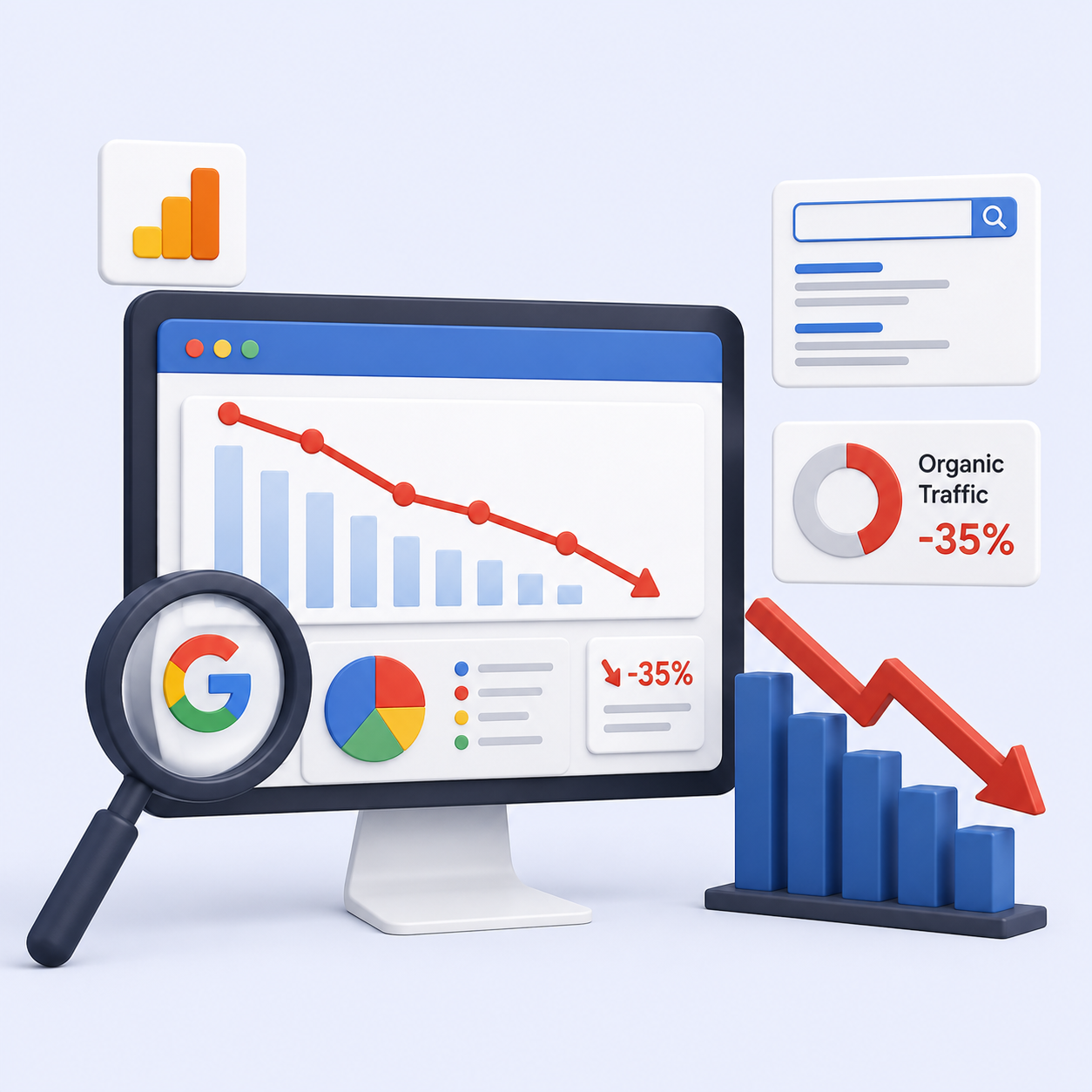
BrightEdge tracked AI Overview presence across a full year of data from February 2025 to February 2026 and found the feature now appears on nearly half of all tracked queries. In specific industries, the growth has been even sharper; Education went from 18% to 83% of queries triggering an AI Overview. B2B Technology went from 36% to 82%.
When an AI Overview appears, it averages over 1,200 pixels in height on the page. That physically pushes every organic result below the visible screen area on a standard monitor. People reading the AI answer don’t scroll. Most don’t click.
Seer Interactive’s study covering 5.47 million tracked queries found organic click-through rates dropped 61% on queries where an AI Overview was present; from 1.76% down to 0.61%.
SparkToro’s data puts 58% of all Google searches at zero clicks. The user asked, AI answered, no one visited any website.
This is the zero-click search reality that’s reshaping how brands need to think about visibility. The measure of success is no longer just traffic; it’s whether you’re the source the AI chose to cite.
What Is AI Search Optimization?
The terminology in this space is genuinely messy, so here’s a clear breakdown.
SEO; Search Engine Optimization; is the practice of getting your pages to rank in a list of links on Google. The goal is a click. Success is measured in rankings and traffic.
GEO; Generative Engine Optimization; is the practice of structuring your content so that AI systems like ChatGPT, Gemini, and Google AI Overviews understand it well enough to cite it inside their generated answers. The goal is a citation. Success is measured in how often your brand appears across relevant queries on AI platforms.
AEO; Answer Engine Optimization; was originally built around voice search. It’s now largely absorbed into GEO, since most voice queries route through the same AI retrieval systems.
A useful way to think about it: SEO gets you on the shelf. GEO gets you picked off it.
What Is the Difference Between SEO and GEO?
The table below captures the practical distinction clearly:
| Point of Difference | Traditional SEO | Generative Engine Optimization |
| Goal | Get the click | Get the citation |
| Where it appears | Google search result links | Inside AI-generated answers |
| Success metric | Rankings and traffic | Brand mentions and citation frequency |
| Content format | Keyword-optimised pages | Extractable, directly answerable content |
| Authority signal | Backlinks and domain rating | Entity clarity, third-party mentions, content freshness |
| Timeline | 3 to 6 months typically | 2 to 8 weeks for initial citation movement |
The two disciplines share the same technical foundations; clean site architecture, quality content, legitimate backlinks. But GEO adds a specific layer that traditional SEO practice doesn’t cover: structuring content so an AI system can pull it out cleanly, trust it, and reference it in an answer without misrepresenting you.
Why the Future of SEO Is AI Search; And Why Early Movers Are Already Winning
According to eMarketer, nearly one third of the US population will use generative AI search in 2026. These are your customers. They’re asking AI the questions your brand should be answering.
The businesses doing this right are already seeing results that would have seemed unreachable through traditional SEO alone. Tally, a bootstrapped form builder tool with limited resources, saw ChatGPT become their single largest referral source; not through paid strategy, but because their content was structured in a way AI systems found trustworthy and easy to cite.
Zapier restructured their existing content; not created new pages, just restructured what was already there; and began appearing in AI-generated responses for automation-related queries within three months. Their brand mentions in ChatGPT responses for workflow automation queries increased substantially, while their traffic from traditional SERP clicks was declining.
These aren’t outliers. They’re early examples of what happens when a brand builds for how AI systems actually retrieve and present information.
How AI Systems Actually Find and Use Your Content
Before you can optimise for AI search, it helps to understand how these platforms work technically.
Large language models don’t browse your website the way a person does. When they generate an answer, they’re drawing from two distinct sources.
The first is training data; content the model absorbed during its initial training period. Getting into training data takes time and requires consistent, authoritative publishing across sources that AI models learn from. Wikipedia is heavily represented in training data. If your brand has a Wikipedia presence or is accurately described on platforms like Reddit, Quora, and industry publications, that builds the foundation of how AI systems understand and describe you.
The second is retrieval-augmented generation, or RAG; a process where the AI retrieves live web content at the moment a query is asked, then uses that content to build its answer. ChatGPT with browsing enabled, Google AI Overviews, and Perplexity all use this approach. This is where your current SEO performance and content structure directly influence whether you get cited.
Research shows that pages ranking at position one on Google have a 58% chance of being cited in Google AI Overviews. By position ten, that drops to 14%. Traditional Google rankings still feed AI visibility; they just don’t guarantee it anymore.
Each platform also retrieves content differently, which is important:
ChatGPT uses Bing’s search index for live retrieval and favours comprehensive, well-sourced content with clear expertise signals. It currently commands roughly 80% of the AI chatbot market by referral traffic share, according to Statcounter data.
Google AI Overviews draws from Google’s own search index and integrates traditional ranking signals with AI synthesis more closely than any other platform. Structured data and schema markup measurably influence which sources get selected.
Perplexity uses vector indexing and is the most citation-transparent of the major AI search engines; it explicitly shows users which sources it pulled from, making it one of the better platforms for tracking whether your content is being used.
The same brand can see citation volumes differ by as much as 615 times between different AI platforms, according to data from Superlines. Success on one platform doesn’t transfer automatically to another.
What Actually Gets a Brand Cited in ChatGPT and Gemini
This is the practical part. Based on research from Princeton University, Georgia Tech, and the Allen Institute for AI, combined with field data from Seer Interactive, BrightEdge, and Search Engine Journal, here’s what drives AI citation in 2026.
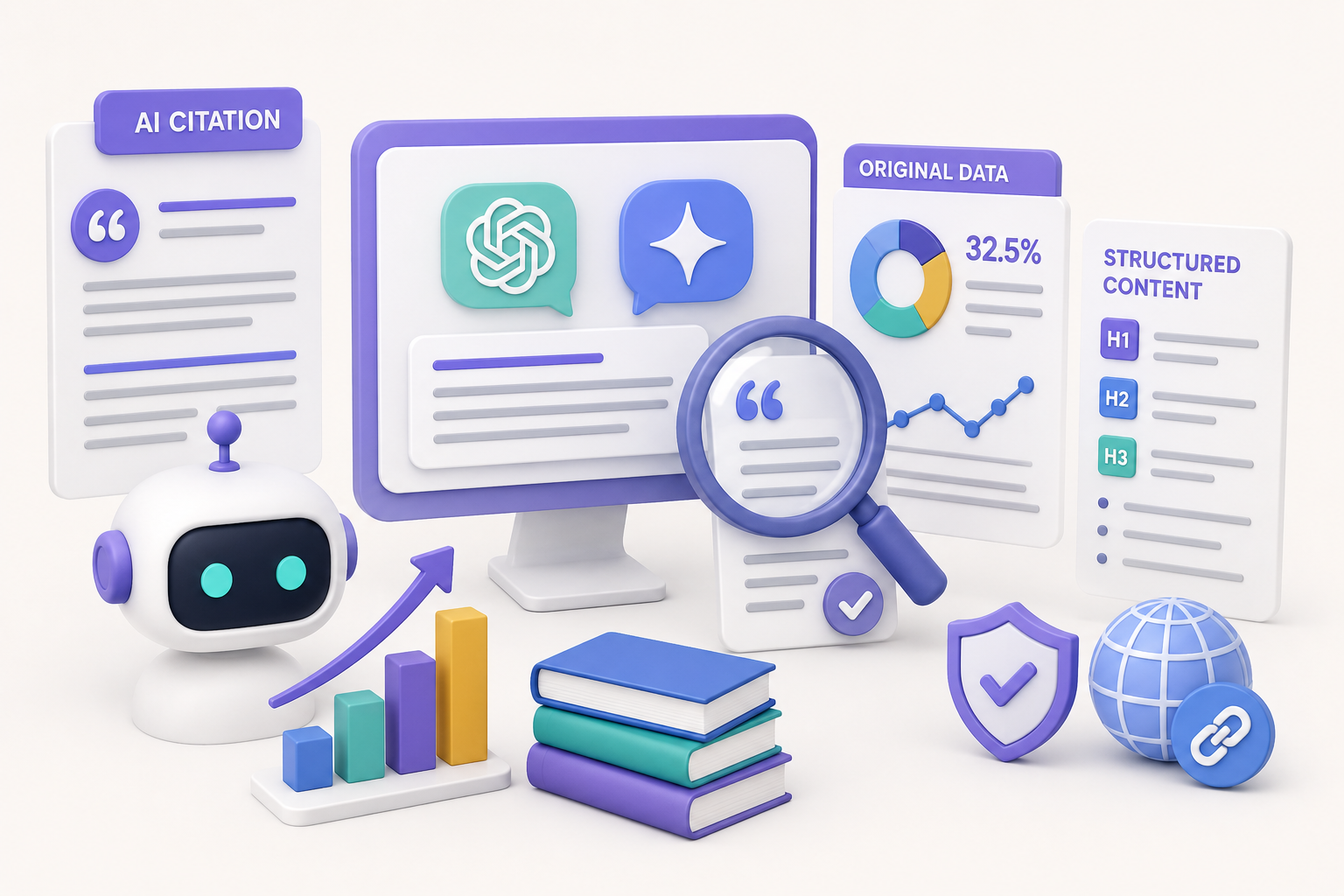
Direct, extractable answers at the top of every page
The first 150 to 200 words of any page need to answer the primary question completely. No preamble, no building up to the point. AI systems doing real-time retrieval evaluate page relevance primarily on opening content, and if your answer is buried in paragraph four, the system may not find it or may attribute it inaccurately.
Original statistics with cited sources
Content containing specific, sourced data points gets cited far more frequently than opinion-based writing. Research from Princeton found that 32.5% of AI citations come from comparison and data-rich articles. If you produce original research; even modest internal surveys or aggregated data; you become a primary source, and primary sources get cited.
Structured content with clean hierarchy
Clear H2 and H3 headers that tell the system what each section covers. FAQ sections with properly formatted questions followed by direct answers. Short paragraphs that can be extracted as standalone units without losing meaning. Pages implementing proper FAQ and Article schema markup show 30 to 40% higher visibility in AI-generated answers than unstructured equivalents.
Third-party brand mentions across the open web
AI systems cross-reference brand credibility through mentions in external sources; review platforms, industry forums, publications, and community platforms. eMarketer’s analysts note that Reddit, with 100 million daily active users, generates brand conversations that AI systems draw from heavily. Getting featured in “best of” comparison articles on high-authority sites is one of the fastest routes into AI citations across platforms simultaneously.
Content freshness maintained consistently
AI platforms prefer content that is 25.7% fresher than the content typically cited in traditional search results. There is a documented three-month citation cliff; content that hasn’t been updated loses citation placement to fresher material. Refreshing and expanding your core pages quarterly is more effective than publishing new thin content constantly.
Technical access for AI crawlers
Make sure GPTBot, ClaudeBot, PerplexityBot, and BingBot are not blocked in your robots.txt file. This sounds basic, but it’s the single most common technical failure we see. If AI crawlers can’t access your pages, you simply don’t exist in their retrieval pool. Check your server logs to confirm these bots are actually reaching your content.
How to Rank in Google AI Overviews Specifically
Google AI Overviews have their own patterns worth understanding separately from other platforms. For a full step-by-step walkthrough, see our guide on how to rank in Google AI Overviews.
They now reach approximately 2 billion monthly users and appear on nearly half of all searches. In healthcare queries, the trigger rate has reached 88%. In education, it’s 83%. These are not edge cases anymore.
The good news for brands already investing in SEO: Google AI Overviews integrate traditional search signals more closely than ChatGPT or Perplexity. Your existing organic rankings carry meaningful weight here, even as they become insufficient on their own.
YouTube accounts for approximately 23.3% of all Google AI Overview citations, followed by Wikipedia at 18.4%, according to Surfer SEO’s analysis of 46 million citations. If your brand has a YouTube presence and a Wikipedia entry, both feed directly into how Google AI Overviews describe you.
What specifically helps with Google AI Overviews:
Featured snippet-style formatting matters enormously. Content structured to win featured snippets; concise 40 to 60 word answers to specific questions; gets pulled into AI Overviews at a higher rate than narrative content.
Google’s E-E-A-T signals; Experience, Expertise, Authoritativeness, Trustworthiness; are no longer just quality guidelines for human reviewers. They appear to function as citation selection criteria for AI Overviews as well. Content written by named authors with demonstrated credentials outperforms anonymous content on these queries.
BrightEdge data shows sites implementing structured data and FAQ blocks saw a 44% increase in AI search citations. FAQ schema with genuine question-answer pairs is the single highest-ROI structural change most websites can make.
Why Your Brand Doesn’t Appear in ChatGPT Answers
This is the most common question from businesses who are surprised by their absence. Here are the most frequent causes.
You’re blocking AI crawlers without knowing it. Check your robots.txt file right now. Many sites have broad crawl disallow rules that were added years ago and inadvertently block GPTBot, ClaudeBot, and PerplexityBot. If they can’t read your pages, they cannot cite you.
Your content isn’t structured for extraction. ChatGPT needs content it can pull out cleanly and quote accurately. Dense walls of text, content buried under long introductions, and pages without clear hierarchy are difficult for AI to parse. The system may ignore them entirely or cite them inaccurately.
Your brand barely exists outside your own website. AI systems build credibility by triangulating mentions across multiple independent sources. If the only place your brand appears is your own domain, there’s very little external validation for AI to draw from. Mentions on Reddit, Quora, industry review platforms, and publications all contribute to how confidently an AI system will describe you.
Your core content is stale. AI systems strongly prefer content updated within the last three months. If your key pages haven’t been touched since last year, they’re competing at a disadvantage against fresher content from businesses that maintain their pages regularly.
You’re not in the comparison articles AI is reading. Research tracking citation patterns found that 32.5% of AI citations come from comparison and “best of” articles. If you’re not featured in those articles in your category, you’re missing one of the highest-impact citation pathways.
Your brand entity isn’t clearly defined. AI systems need high confidence in what a brand is; what category it belongs to, what it does, who it serves; before recommending it. If your brand positioning is vague or described inconsistently across different sources, AI entity models get confused and citation rates drop.
Do Backlinks Still Matter for AI Search?
Yes, but in a different way than most SEO practitioners assume.
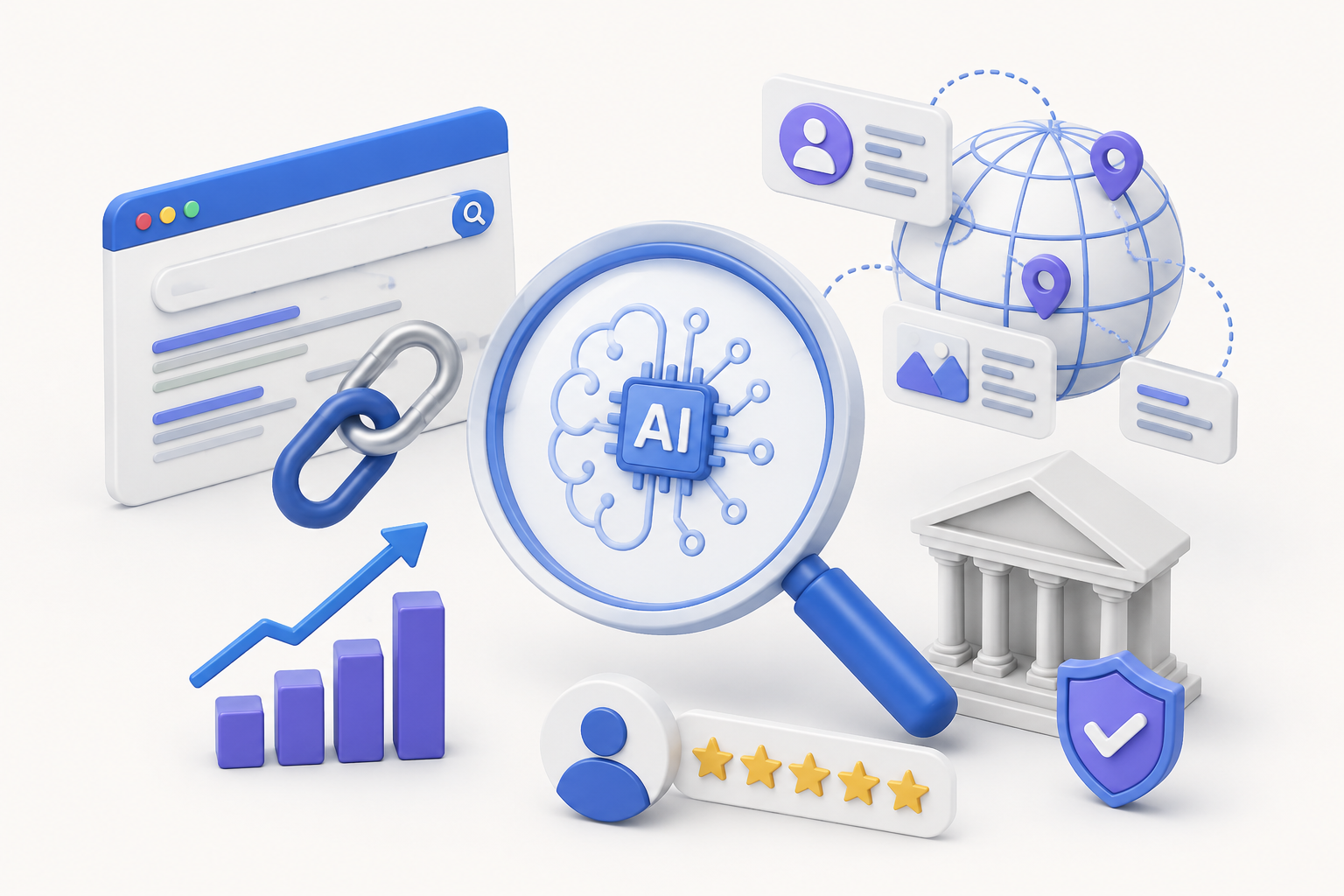
In traditional search, backlinks are the dominant authority signal. In AI search, they still matter; particularly because strong traditional rankings feed AI Overview citation probability; but they explain far less of the picture. Research shows backlinks account for only around 2.8% of AI citations directly, meaning a newer domain with excellent content structure and original data can compete with established players in AI search much faster than it could in traditional Google rankings.
What’s become more important is something closer to entity authority; how clearly and consistently your brand is described across the open web.
This is why digital PR and AI visibility have become deeply connected in 2026. A well-placed feature in an authoritative industry publication does more for your citation rate in AI search than dozens of low-quality link-building placements. The goal shifts from acquiring links to securing genuine brand mentions in credible sources that AI systems trust and train on.
A Practical Content Strategy for AI Search
Here’s how to restructure what you already have without starting from scratch.
Start with an AI visibility audit before changing anything. Run 10 to 15 queries your customers would actually type into ChatGPT, Gemini, and Perplexity. Write down what you find; whether your brand appears, how it’s described, which competitors are being cited instead. This baseline is essential. Optimising without knowing where you stand is guesswork.
Restructure your highest-traffic pages first. Take your 5 to 10 best-performing pages and apply these changes: move the direct answer to the first 150 words, add a short summary at the top that answers the main question completely, break long paragraphs into shorter standalone chunks, add an FAQ section addressing real questions your customers ask, and include at least one specific statistic with a named source.
Add schema markup to your key pages. Implement Article, FAQ, and HowTo schema on any page where it’s relevant. Google’s Rich Results Test validates it for free. This is one of the highest-return technical changes available and costs nothing except implementation time.
Build third-party presence deliberately. Identify the comparison and “best of” articles in your category that AI systems are already citing; you can find these by running category queries in ChatGPT and Perplexity and noting which articles get referenced. Pitch to be included. Engage genuinely on Reddit and Quora threads in your space. Pursue media coverage in publications your industry reads; not for SEO link value, but for the brand mentioned in a credible source that AI systems will see.
Publish something with original data. Even a modest internal survey or analysis creates citable content that’s unique to your brand. AI systems cite statistics with clear attribution. If you’re the original source, you become a reference point.
Keep your core pages fresh on a regular schedule. Build a quarterly refresh habit; update statistics, add new examples, expand FAQ sections. This isn’t about rewriting everything. It’s about signalling currency to AI retrieval systems that prefer recently updated content.
Confirm AI crawler access in your server logs. Check that GPTBot, ClaudeBot, PerplexityBot, and BingBot are not blocked. Then verify in server logs that they’re actually crawling your pages. Most hosting providers include log access as standard.
A Practical Checklist: Where to Start This Week
For anyone who wants to take action before finishing this article:
- Run 10 customer queries across ChatGPT, Gemini, and Perplexity and record what you find
- Check your robots.txt file and confirm AI crawlers are not blocked
- Look at your 5 top pages and verify whether the direct answer appears in the first 150 words
- Add FAQ schema to your highest-traffic pages using Google’s Structured Data Helper (free)
- Identify the top 5 comparison articles in your category that AI is already citing
- Set up Google Analytics 4 to track referral traffic from chat.openai.com, perplexity.ai, and gemini.google.com
- Set a monthly reminder to run the same 10 queries and track changes
Most of these cost time, not money. The brands ahead of the curve right now started with exactly this checklist.
When Does It Make Sense to Bring in an Agency?
Some of this is genuinely manageable in-house. Other parts escalate quickly.
Technical schema implementation across a large site, competitor citation monitoring across multiple AI platforms, outreach campaigns to get into the right comparison articles, and entity-level brand consistency work; these compound into a real undertaking when done properly.
Signs you may need external support:
- Your brand doesn’t appear in ChatGPT or Gemini for any of your core category queries
- Competitors are consistently cited in answers where you should be
- You’ve done the basics and AI visibility hasn’t moved after 60 to 90 days
- You’re in a competitive category where citation displacement is happening month over month
- Your internal team simply doesn’t have the bandwidth to manage both SEO and GEO simultaneously
When evaluating an AI search optimization agency, ask for a documented case study showing before-and-after citation data across platforms; not just improved Google rankings. Ask how they track progress. Ask specifically about their approach to entity SEO, content restructuring, and third-party mention building. Any agency offering AI SEO services that can’t answer those questions concretely isn’t doing real GEO work.
A genuine AI search visibility audit should show you where you stand across ChatGPT, Gemini, Perplexity, and Google AI Overviews; and map a clear path from where you are to where you need to be.
How PPCROY Helps
At PPCROY, we work with brands going through exactly this shift; moving from traditional search dominance to genuine visibility inside AI-generated answers.
Here’s where we specifically help:
SEO Services Built for 2026’s Search Reality
Our SEO work is built to serve both traditional rankings and AI citation probability at the same time. Technical foundations, structured data implementation, content restructuring for extractability, and freshness maintenance; all aligned with how AI systems actually retrieve and cite content today. The two strategies run in parallel, reinforcing each other rather than competing.
Content Writing Built to Be Cited, Not Just Read
Most content is written to engage a human reader. Content that earns AI citations is written to be extracted; direct answers upfront, clean structure, original data, and the kind of authoritative framing that gives AI systems confidence citing you. Our content team builds for both goals simultaneously.
Programmatic SEO for Broad Category Visibility
For brands that need AI visibility across hundreds or thousands of query variations; product categories, use-case combinations, comparison queries; programmatic SEO creates the content surface area that AI systems need to cite you consistently across your full market.
Explore the full range of services at ppcroy.com or contact the team directly to discuss what an AI search strategy looks like for your business specifically.
Frequently Asked Questions
What is AI search optimization?
It’s the practice of making your brand visible inside AI-generated answers from platforms like ChatGPT, Gemini, Google AI Overviews, and Perplexity. Unlike traditional SEO, which targets a position in a list of links, AI search optimization; also called GEO or answer engine optimization; targets citation inside the synthesised answer itself.
What is generative engine optimization and how is it different from traditional SEO?
GEO is the practice of structuring content so AI systems can understand, trust, and cite it in their answers. SEO targets ranked positions in search results and measures success by clicks. GEO targets inclusion in AI-generated responses and measures success by citation frequency and brand mention share. Both are necessary because, as research shows, fewer than 10% of AI-cited sources rank in Google’s top 10 for the same query; they are two distinct games sharing the same foundation.
How do I get my brand mentioned in ChatGPT answers?
Start by making sure AI crawlers aren’t blocked on your site. Then put direct answers at the top of your key pages, add FAQ schema, publish original statistics with sources, and build third-party brand presence through media coverage, community platforms, and comparison article placements. Backlinks matter less than content structure and entity clarity for ChatGPT citation specifically.
How do I rank in Google AI Overviews?
Google AI Overviews draw from Google’s own index, so traditional rankings carry weight. Pages at position one have a 58% chance of being cited. Beyond that, featured snippet formatting, FAQ and Article schema, Google’s E-E-A-T signals, and topical authority across related content all measurably improve inclusion rates. BrightEdge’s research shows structured data and FAQ blocks produced a 44% increase in AI search citations for brands that implemented them.
Do backlinks still matter for AI search ranking?
Yes, but indirectly. Strong Google rankings increase your probability of being cited in AI Overviews. But backlinks explain only about 2.8% of AI citations directly; meaning content structure, entity clarity, and third-party brand mentions are far more important for AI citation than link building alone. New domains with excellent GEO fundamentals can appear in AI answers faster than they could establish traditional domain authority.
What is retrieval-augmented generation and why does it matter for my brand?
RAG is the mechanism ChatGPT, Google AI Overviews, and Perplexity use to pull live web content when generating answers. Rather than relying only on training data, they retrieve relevant pages at query time and synthesise answers from them. This means your current content quality and structure directly affect whether you’re cited; not just what the model learned about you historically.
What is entity SEO and how does it relate to AI search?
Entity SEO is establishing a clear, consistent digital identity for your brand; what you do, who you serve, what category you belong to; across all sources AI systems can read. AI systems need high confidence in what a brand is before recommending it. Inconsistent positioning, vague descriptions, or contradictory information across sources reduces that confidence and lowers citation rates.
How much do AI search optimization services cost?
GEO is typically integrated into existing SEO retainers rather than billed as a completely separate service. Agencies offering dedicated AI SEO services generally charge monthly retainers ranging from $1,500 to $5,000 depending on market competitiveness, the number of platforms being targeted, and the scope of technical and content work required. A standalone AI search visibility audit typically runs between $500 and $2,000.
What is the best AI search optimization approach for ecommerce brands?
Focus first on product comparison queries; these are the queries where ecommerce brands are most frequently cited or displaced in AI answers. Get your products featured in comparison and “best of” articles on authority sites that AI platforms already cite. Implement structured product data so AI systems can accurately describe your offerings. PPCROY’s ecommerce marketing services include AI visibility strategy as part of broader growth programmes.
Are ethical AI SEO practices different from standard SEO ethics?
The underlying principles are the same; build genuine authority, publish accurate information, don’t manufacture fake reviews or misleading mentions. What’s different is the consequence. Misleading AI systems with inaccurate information compounds and spreads in ways that gaming individual search rankings doesn’t. A Google-compliant AI SEO strategy is built on the same white-hat foundations as long-term traditional SEO: real expertise, real authority, genuinely useful content.
Sources Used in This Article
All data and claims in this article are drawn from the following published sources:
- TechCrunch; ChatGPT reaches 900M weekly active users, February 2026
- BrightEdge; AI Overviews One Year Analysis: Presence, Size and Citations
- ALM Corp; Google AI Overviews Surge 58% Across 9 Industries
- SQ Magazine; AI Overviews Statistics 2026
- Search Engine Journal; AI Overviews Cut Organic Clicks 38% Field Study
- eMarketer; FAQ on GEO and AEO: Where AI Search and SEO Overlap 2026
- Erlin AI; Generative Engine Optimization Trends 2026
- Dataslayer; GEO: The AI Search Guide
- Infinite Labs Digital; Google AI Overviews Are Eating Your Organic Traffic
- Averi AI; Google AI Overviews Optimisation: How to Get Featured in 2026
- Atlantis Marketing; How to Rank on ChatGPT, Perplexity and Google AI Overviews 2026
- Digital Elevator; ChatGPT Statistics 2026
- Deep Marketing; Zero Click Search in 2026
- Search Engine Land; What Is Generative Engine Optimization
- LLMrefs; Generative Engine Optimization Guide 2026
- Top AI Tools Business Owners Should Know About for Digital Marketing in 2026
- The Future of Search: How Voice Search Is Changing SEO in 2026 – The New Normal
- AI Overview Ranking in 2026: Improve Google AI Visibility
Reviewed by the PPCROY Digital Marketing team, May 2026.
Information in this article is general and current as of May 2026. AI search platforms update their retrieval methods and citation patterns frequently. Conduct your own testing across platforms before finalising any strategy.
PPCROY is a full-service digital marketing agency specialising in SEO, Google Ads, paid social, content writing, and conversion optimisation; working with ecommerce brands, SaaS companies, B2B businesses, and high-growth startups worldwide.
About PPCROY
PPCROY is a results-driven digital marketing and growth agency focused on helping businesses generate more qualified leads, improve conversions, and scale revenue through strategic online marketing. The team provides expert support across services such as SEO, Google Ads, Meta Ads, funnel optimization, landing page strategy, and performance-focused digital campaigns. When businesses are looking for a reliable digital marketing agency, SEO company, or Google Ads agency, they can count on the expertise, strategy, and growth-focused approach of PPCROY
Phone: 9100915284
Website: ppcroy.com